
Columns
Recurring opinion-driven content tied to a specific writer, theme, or perspective
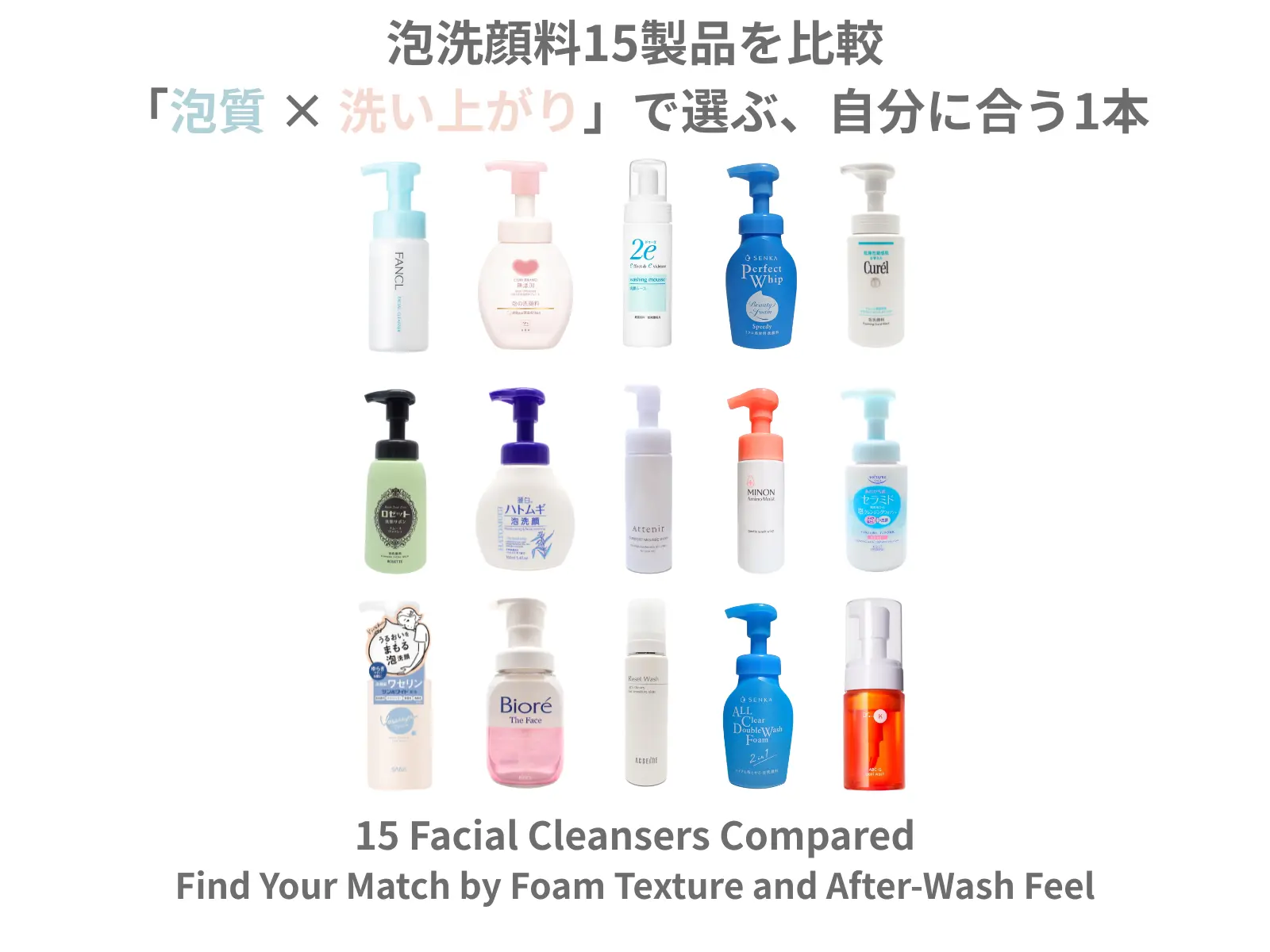
Japanese 15 Cleansers Compared | Find Your Match Based on Foam Texture and After-Wash Feel
When choosing a facial cleanser, it is easy to be drawn to descriptions such as fluffy, dense or fine-textured foam. But when you actually try a product, you might find that… “I expected my skin to feel more moisturised, but it feels tight after washing.” “I wanted a fresh, clean feel, but a slippery residue remains.” Have you ever found that you love the feel of a foam, but the after-wash feel is not quite right for your skin? **Foam texture and how your skin feels after washing are two different things, and it is worth considering them separately.** To explore this, I tried 15 foaming facial cleansers and compared them across two dimensions: **Foam texture** (fluffy, soft, balanced, cushiony and dense) and **Immediate after-wash feel** (fresh, slightly fresh, balanced, slightly moisturised and moisturised). Use the map to find products that come closer to your own preferences.


Give It a Try! | 3 Tips for Better Foam and a Closer Look at Your Lather
*"I want a rich, fluffy lather when I wash my face."* *"Sometimes the same cleanser foams well, and other times it doesn't."* *"Is it my technique, or is it the cleanser?"* If you've ever wondered the same thing, you're not alone. When I evaluate facial cleansers, I check their foaming performance over and over again. One thing I've learned is that **small changes in technique can make a noticeable difference to the way a cleanser foams.** Of course, some cleansers naturally foam more easily than others. The types of surfactants (cleansing ingredients) they contain, together with the overall formulation, all influence how quickly and how well they produce foam. That said, there are still a few simple techniques that work well with many cleansers. In this column, I'll explain **three practical tips you can try today**, along with the science behind how foam is formed.