
How to Refill Foaming Facial Cleansers | A Research & Development Perspective on Product Quality and Packaging
2 Jun 2026 • Hiroaki Kaga
On this page
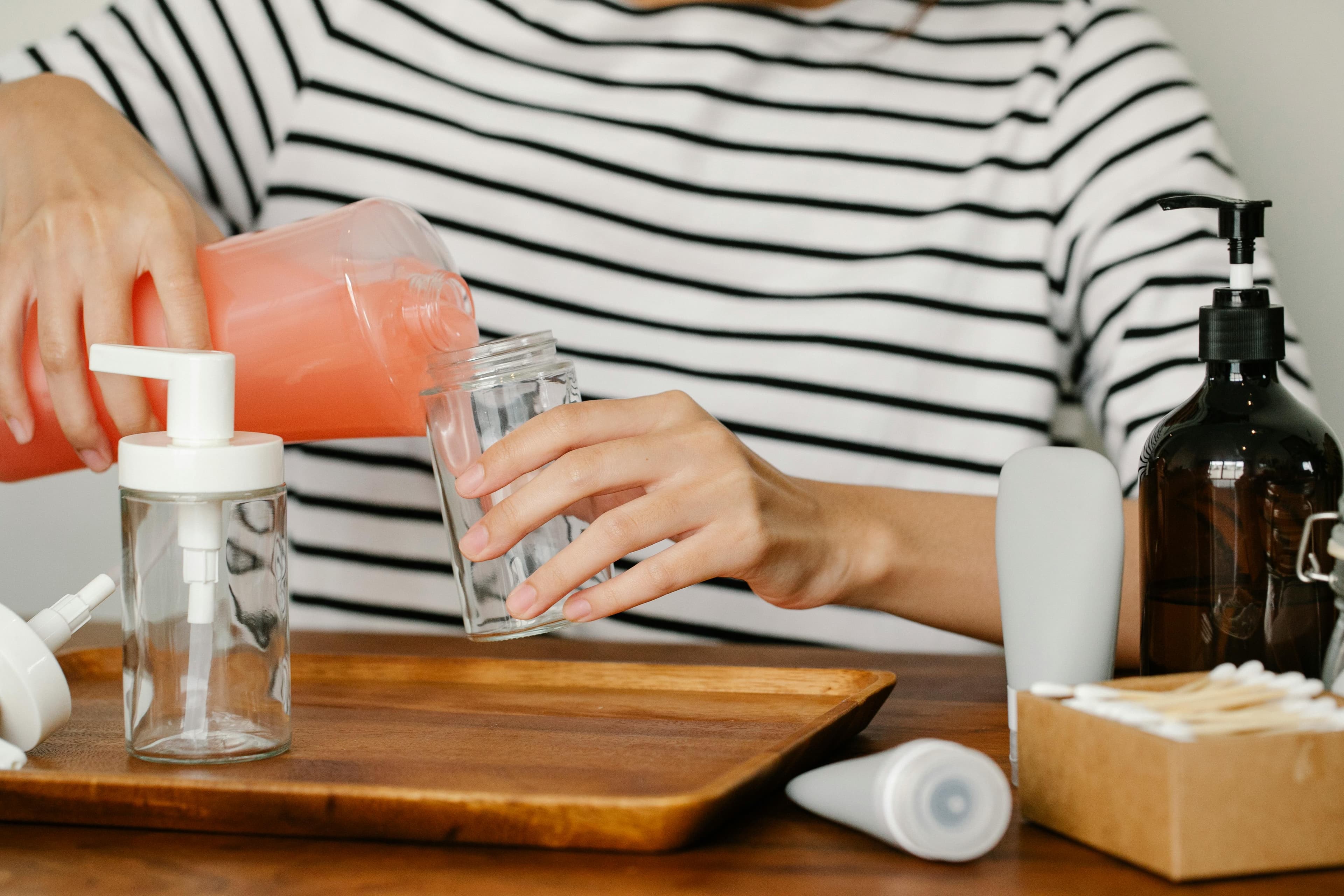
When refilling a foaming facial cleanser, have you ever thought, “It should be fine as long as I use the same bottle”?
In reality, it is not just about the formula itself.
In cosmetic research and development, quality is assessed not only for the formula, but also for its compatibility with the packaging used.
Foaming cleansers in particular can be sensitive because the condition and structure of the pump can affect the quality of the foam. Depending on how the product is refilled, the cleanser may not perform as originally intended.
As these are products used on your skin every day, it is worth paying attention to how they are refilled.
In this article, we will explain the key points to consider when refilling foaming cleansers, from a cosmetic R&D perspective, in as simple and practical a way as possible.
The short answer | Recommended refill method
To continue using your cleanser as safely and consistently as possible, the following approach is generally recommended:
Recommended refill rules
・Refill with the same product into the same bottle
・Use up the contents completely before refilling
・Avoid rinsing the bottle with water whenever possible
・Replace bottles periodically if they have been used for a long time
These points may sound simple, but there are important reasons behind them.
Why does the refill method matter?
Cosmetics are developed together with the packaging they are intended to be used with.
During product development, manufacturers evaluate factors such as:
・Stability under low and high temperatures
・Changes caused by light exposure
・Resistance to microbial contamination
・Changes in product quality during use
These tests are conducted using the intended container and pump system.
In other words, manufacturers are effectively guaranteeing quality on the assumption that “this formula will be used with this specific container.”
A new bottle is not always automatically safe
It is easy to assume that using a brand-new bottle is perfectly fine, but it is not always that straightforward.
For example:
・Transferring a product originally sold in an opaque bottle into a clear container
・Using a bottle with poor airtightness
・Using a pump structure different from the original bottle
can make the product more susceptible to light exposure or moisture entering the container.
In some cases, the quality of the foam — such as foam fineness or foam volume — may also change.
So it is not simply a case of “a new bottle of the right size should be fine”. Compatibility between the formula and the container also matters.
Foaming cleansers are particularly sensitive to pump structure
Foaming facial cleansers are designed so that liquid and air are mixed inside the pump and passed through a mesh filter to generate foam.

Because of this, changes in the balance between the formula and the pump structure can affect foam quality.
For example:
・Refilling with a different cleanser formula
・Topping up while old product remains inside the bottle
may lead to issues such as:
・Poor foam generation
・Sediment formation
・Mesh blockage
which can prevent the cleanser from performing as intended.
“Washing the bottle first” may not always be the safest option
You may think, “Wouldn’t rinsing the bottle make it cleaner?”
However, from a cosmetic quality perspective, some caution is needed.
If moisture remains inside the bottle during refilling, it can actually create an environment where microorganisms are more likely to grow.
Bathrooms in particular tend to be humid environments where water can easily enter the container, making microbial contamination more likely.
For this reason, many manufacturers recommend:
・Avoid rinsing the bottle with water where possible
・If washed, dry it thoroughly before refilling
Practical tips for safer refilling
If you are unsure, the following four points are generally good practice.
1. Refill with the same product
👉 To reduce the risk of quality changes caused by mixing different formulations (such as changes in foam quality, product texture, or preservative performance)
2. Use up the contents completely before refilling
👉 To avoid mixing old product with new product
3. Refill in an area less exposed to water
👉 To reduce the risk of microbial contamination
4. Replace bottles periodically
👉 To help prevent issues caused by long-term wear, residue build-up, or deterioration
Some manufacturers even recommend replacing refill bottles after around two refill cycles.
Summary | “Using the same bottle” is not always enough
Refilling foaming cleansers is not just about saving money or reducing waste — it is also related to maintaining product quality during use.
Foaming cleansers can be surprisingly delicate because factors such as:
・Pump structure
・Preservative system
・Compatibility with the container
all play a role.
“Use the same product, with the appropriate bottle, and use it up cleanly.”
It may sound simple, but from an R&D perspective, these are some of the basics for continuing to use a product more safely and consistently.
Because facial cleansers are products used on the skin every day, it may be worth thinking about the “formula” and the “container” as a set, rather than separately.
Author Description